Finding Meaning in a Difficult Decision
After the loss of someone you love, every decision feels heavy. Choosing an urn is one of those decisions that can feel both deeply personal and completely overwhelming. There are more options than most families expect, and without guidance, the process can add unnecessary stress to an already painful time.
This guide is here to help. Whether you are selecting an urn for yourself as part of a pre-planning process or choosing one to honour a loved one who has passed, understanding your options will make the decision clearer and more meaningful.
Understanding Urn Sizes
The most important practical consideration when choosing an urn is size. Urns are measured by cubic inches of capacity, and the general rule is simple: you need one cubic inch of capacity for every pound of body weight.
- Standard adult urns hold approximately 200 cubic inches, which is suitable for most adults.
- Companion urns are designed to hold the cremated remains of two people, typically a couple. These hold approximately 400 cubic inches.
- Keepsake urns are small urns that hold a symbolic portion of the remains. Families sometimes choose several keepsake urns so that multiple family members can each keep a portion.
- Child and infant urns are smaller and are available in a range of gentle, thoughtful designs.
If you are unsure about what size you need, your funeral service provider can help you determine the right fit.
Materials: What Each Option Offers
The material of an urn affects its appearance, durability, weight, and environmental impact. Here are the most common options:
Wood. Wooden urns offer warmth and natural beauty. They are available in a wide range of woods, from classic maple and oak to more exotic options like walnut or mahogany. Wood can be carved, engraved, or inlaid with decorative elements. These urns are ideal for families who value craftsmanship and a traditional aesthetic. Wood is also suitable for burial.
Bronze and Brass. Metal urns are among the most durable options available. Bronze and brass develop a rich patina over time, giving them a distinguished, timeless quality. They are well suited for display in a home or placement in a columbarium niche. Many metal urns feature intricate detailing or hand-applied finishes.
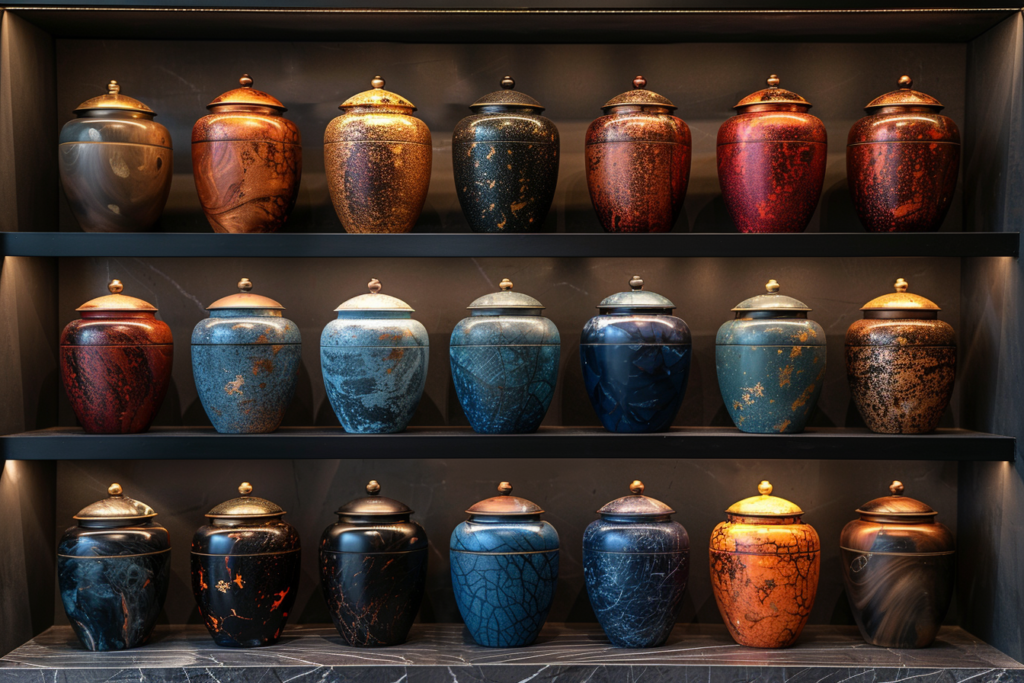
Ceramic and Porcelain. These urns can be true works of art. Glazed, painted, or hand-thrown by artisans, ceramic urns offer unique beauty and a personal touch. They are ideal for families who want something one of a kind. However, they are more fragile than metal or wood and are best suited for indoor display.
Marble and Stone. Stone urns convey permanence and dignity. Natural marble, granite, and onyx are common choices. These urns are heavy and extremely durable, making them appropriate for outdoor placement, columbarium niches, or home display.
Biodegradable and Ecological. For families who want to return their loved one to the earth, biodegradable urns are a meaningful choice. Made from materials like recycled paper, salt, sand, or plant-based compounds, these urns are designed to break down naturally when buried in soil or placed in water. Some even contain seeds that grow into a tree or plant — a living memorial.
Personalization: Making It Truly Theirs
An urn does not have to be generic. Personalization transforms a vessel into a tribute. Common options include:
- Engraving: Names, dates, a meaningful quote, or a short message can be engraved directly onto most metal, wood, and stone urns.
- Photo urns: Some urns feature a frame or panel where a photograph of the deceased can be displayed.
- Custom artwork: Hand-painted designs, cultural motifs, or symbols of a hobby or passion (music, nature, sports) can be added to many urn types.
- Shape and design: Urns are no longer limited to the classic vase shape. Options now include sculptures, books, hearts, and abstract forms.
Cultural and Religious Considerations
Different traditions carry specific expectations around cremation and the handling of remains:
- Catholic tradition: The Catholic Church permits cremation but prefers that remains be kept intact (not scattered) and placed in a sacred location such as a cemetery or columbarium.
- Jewish tradition: Traditional Jewish practice favours burial over cremation, though some Reform communities are more flexible. Consult with your rabbi.
- Hindu tradition: Cremation is the standard practice, and remains are often scattered in a body of water. Biodegradable urns designed for water release can be appropriate.
- Buddhist tradition: Practices vary widely. Some traditions favour cremation; others prefer burial. A funeral advisor familiar with your tradition can help guide the choice.
- Secular and non-religious families: Without religious guidelines, the choice is entirely personal. Many secular families choose urns that reflect the personality, values, or passions of the deceased.
Where Will the Urn Be Placed?
The intended final resting place should influence your choice:
- Columbarium niche: Check the dimensions of the niche before purchasing. Standard niches vary in size.
- Home display: Choose an urn that feels appropriate in your living space.
- Burial: If the urn will be buried, choose a material that is durable in soil. Many cemeteries also require an urn vault for burial.
- Scattering: If you plan to scatter part or all of the remains, a scattering urn with a specially designed opening makes the process easier and more dignified.
- Water release: Biodegradable urns designed for water are available for families who wish to release remains into a lake, river, or the sea.
Take Your Time
There is no rush. Most funeral homes will hold cremated remains safely while you decide. If you need a few days or even a few weeks to choose the right urn, that is completely normal and acceptable.
What matters most is that the urn you choose feels right — for your loved one and for your family.
Explore our full collection to find something meaningful. Browse our urn collection.
Frequently Asked Questions
What size urn do I need?
The standard rule is one cubic inch per pound of body weight. A standard adult urn holds approximately 200 cubic inches, suitable for most adults.
Can two people share one urn?
Yes. Companion urns are designed to hold the remains of two people. These are popular choices for couples who wish to remain together.
Are biodegradable urns safe for water burial?
Yes. Eco-friendly urns made from sand, salt, or plant fibers are specifically designed to dissolve naturally in water, making them ideal for ocean or lake ceremonies.
Can I personalize an urn with photos or engravings?
Most urns can be personalized with laser engraving, custom artwork, photographs, or hand-painted designs. Our artisans offer a wide range of personalization options.
How do I transport an urn on an airplane?
TSA and CATSA allow urns in carry-on luggage. Choose a non-metallic or x-ray friendly urn for easier screening. Always carry documentation from the funeral home.