Choosing the Right Urn: A Complete Guide for Families
Finding Meaning in a Difficult Decision
After the loss of a loved one, every decision feels heavy. Choosing a funeral urn is one of those decisions that is both deeply personal and sometimes overwhelming. The options are more numerous than most families realize, and unfortunately, the moment when you need to make this choice is rarely the moment when you feel most equipped to do so.
This guide is here to help. Whether you are selecting an urn for a loved one who has just passed away, or planning ahead for yourself, we will walk you through the materials, sizes, styles, and personalization options available, so you can make a choice that feels right for your family and honours the person you are remembering.
Understanding Urn Materials
The material of an urn affects not only its appearance but also its durability, its suitability for different purposes, and its price. Here are the most common options:
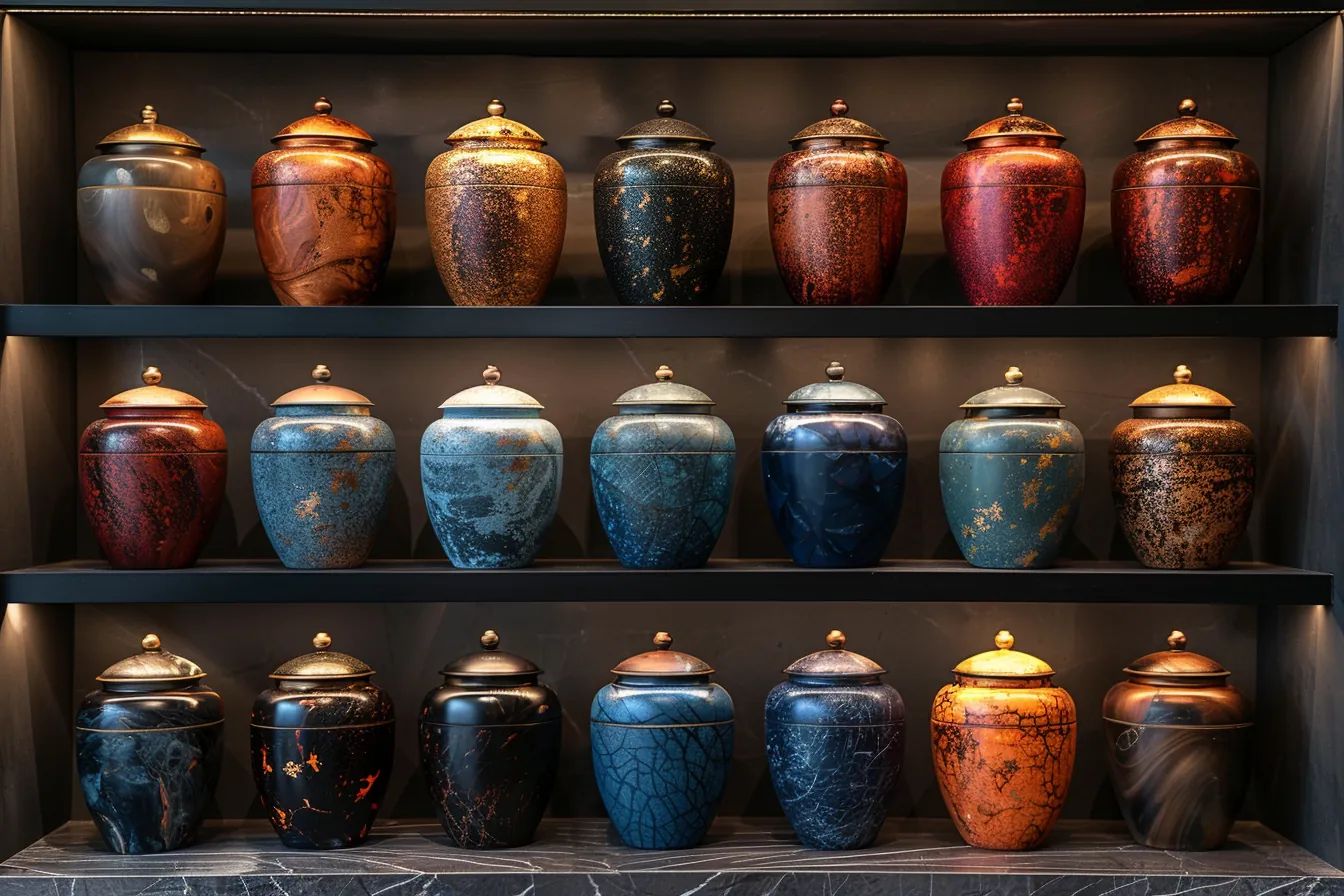
Wood. Wooden urns bring warmth and a natural beauty. They are available in a wide range of species, from maple and walnut to more exotic woods. Each piece is unique because of the natural grain. Wooden urns are ideal for display at home, in a columbarium, or for biodegradable burial.
Metal. Metal urns, whether in bronze, brass, copper, or stainless steel, offer exceptional durability and a timeless elegance. They are often chosen for their ability to stand the test of time and for their dignified appearance.
Stone and marble. Stone urns, carved from marble, granite, or other natural stones, have a substantial, permanent feel. They are often selected for outdoor placement or for families seeking a memorial that will last for generations.
Ceramic and glass. Ceramic and glass urns offer an artistic, handcrafted quality. Each piece is unique, and they can be created in a nearly infinite range of colours and styles. They are more fragile but bring exceptional beauty.
Biodegradable. Biodegradable urns are made from natural, compostable materials such as recycled paper, salt, sand, or plant fibres. They are designed to break down naturally over time, making them ideal for burial or for water scattering.
Keepsake and companion urns. Keepsake urns are smaller versions designed to hold a portion of the ashes, allowing several family members to each keep a memorial. Companion urns are designed to hold the ashes of two people, side by side.
Choosing the Right Size
One of the most common questions we hear is: "What size urn do I need?" The answer depends on several factors.
The general rule is that you need approximately one cubic inch of capacity per pound of body weight. This means that a person weighing 150 pounds will require an urn with a capacity of at least 150 cubic inches. However, this is an approximation, and several factors can influence the actual amount of ashes.
Adult urns typically have a capacity of 200 to 400 cubic inches, which is suitable for most adults. Keepsake urns generally hold 3 to 50 cubic inches. Companion urns can hold 400 to 600 cubic inches or more.
When in doubt, it is always better to choose an urn that is slightly larger than you think you will need. Ashes that do not fit in the urn can be scattered, buried, or divided among family members.
Styles and Designs
Urns are available in a wide range of styles, from the most classic to the most contemporary. Here are some considerations to help you choose:
Traditional. Classic urns, with timeless shapes and finishes, suit families who appreciate elegance and restraint. They are often chosen for placement in a columbarium or at home.
Contemporary. Modern urns, with clean lines and minimalist designs, appeal to families who prefer a more current aesthetic. They can be a beautiful way to reflect the personality of someone who was forward-thinking.
Thematic. Some urns are designed to reflect a passion, a hobby, or a special connection. Whether it is a nature theme, a musical motif, or a design inspired by a beloved place, these urns celebrate what made the person unique.
Personalized. Many urns can be personalized with engraving, a photo, or a special inscription. This personal touch transforms the urn into a truly unique memorial.
Placement and Final Resting Place
Where the urn will rest is an important consideration that can influence your choice of material and size:
At home. If the urn will be kept at home, almost any material and style is suitable. Choose an urn that speaks to you and that fits harmoniously in your space.
In a columbarium. Columbaria have specific size requirements. Check the dimensions of the niche before choosing your urn. Durable materials such as metal, stone, or ceramic are often preferred.
Burial. For ground burial, biodegradable urns are an eco-friendly option. Some cemeteries require an urn vault; check the cemetery's rules.
Scattering. If you plan to scatter the ashes, a biodegradable scattering urn or a travelling urn is the most practical choice.
Personalization Options
Personalization transforms a funeral urn into a truly unique memorial. Here are some options to consider:
- Engraving: name, dates, a short message, or a meaningful quote.
- Photo: a ceramic or metal photo plaque affixed to the urn.
- Symbol or motif: a religious symbol, a nature motif, or a design that reflects the person's passions.
- Custom colour: some urns can be ordered in specific colours to match a favourite shade or a family's preferences.
A Compassionate, No-Pressure Approach
At North Star Funeral Services, we understand that choosing an urn is an emotional decision. Our advisors are here to guide you, answer your questions, and help you find the option that best honours your loved one, without pressure or judgment.
Whether you know exactly what you want or you are just beginning to explore your options, we are here to help. Take your time. Ask questions. And know that there is no wrong choice, only the choice that is right for your family.
Ready to explore our collection? Discover our funeral urns.
Frequently Asked Questions
How do I know what size urn to choose?
The general rule is one cubic inch per pound of body weight. For a 150-pound person, choose an urn with at least 150 cubic inches of capacity. When in doubt, choose a slightly larger urn.
Can I personalize an urn?
Yes. Many urns can be personalized with engraving, a photo plaque, a symbol or motif, or a custom colour. Personalization transforms the urn into a unique memorial.
Are biodegradable urns suitable for burial?
Yes. Biodegradable urns are made from natural materials such as recycled paper, salt, or plant fibres, and are designed to break down naturally in soil or water. They are ideal for eco-friendly burial or water scattering.
Can I divide the ashes among several family members?
Yes. Keepsake urns are designed for exactly this purpose. They are smaller versions that hold a portion of the ashes, allowing several family members to each keep a memorial.
How do I travel with an urn on a plane?
The TSA and CATSA allow urns in carry-on baggage. Choose a non-metallic or X-ray-compatible urn to facilitate screening. Always carry the documentation provided by the funeral home.